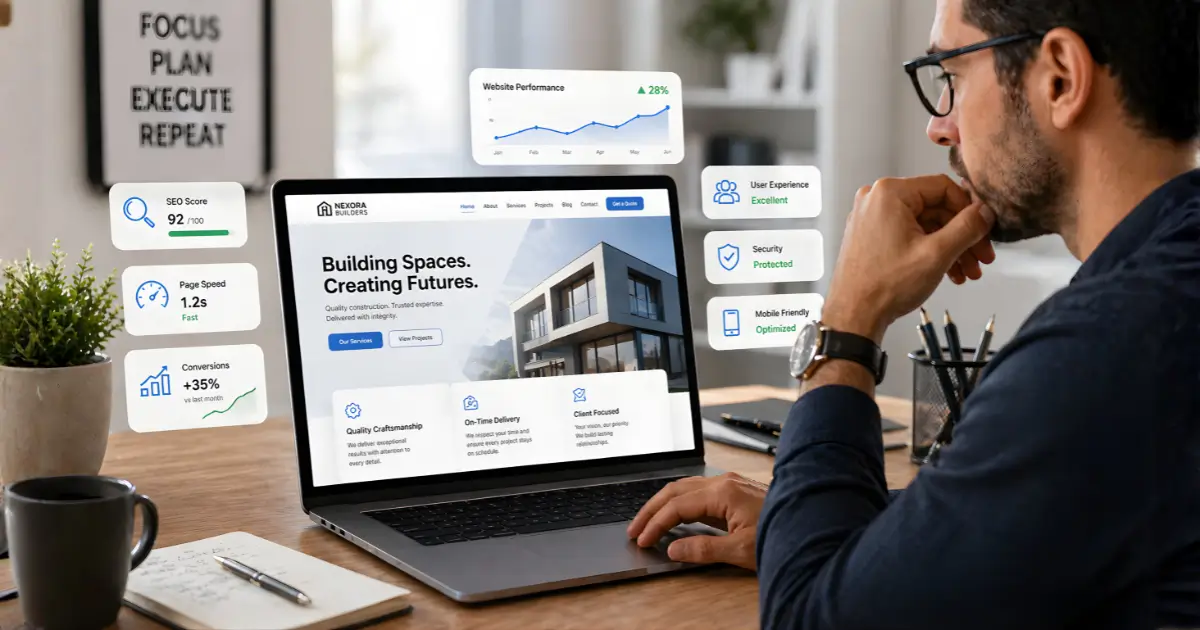
If you need a new website, one of the first decisions is whether to hire a web designer or build it yourself using a DIY website builder.
There is no single right answer for every business.
DIY website builders can be useful if you are just starting out, have a small budget, and only need a basic online presence. Hiring a web designer usually makes more sense when your website needs to feel more professional, support business growth, reflect your brand properly, or convert visitors into enquiries, bookings, or sales.
The better question is not just “Which option is cheaper?”
It is “What does the website need to do for the business?”
What is a DIY website builder?
A DIY website builder is a platform that lets you create a website using templates, drag-and-drop sections, and built-in tools.
Common examples include platforms like Wix, Squarespace, Shopify, and similar website builders. These tools are designed to make it easier for business owners to get a website online without needing to design or code from scratch.
For some businesses, that is enough.
If you need a simple site with a few pages, basic information, and a contact form, a website builder can be a practical place to start.
When a DIY website builder makes sense
A DIY website builder can be a good option when your business is still early and you need something live quickly.
It may suit you if:
- You have a limited budget
- You only need a simple website
- Your brand is still developing
- You are testing an idea or offer
- You are comfortable writing, designing, and editing the site yourself
- You do not need much custom functionality
For a new business, done is often better than perfect. A simple DIY website can give you a starting point while you work out your offer, audience, and positioning.
The trade-off is that you are responsible for the decisions: structure, copy, layout, design, mobile experience, SEO basics, and how the site guides people to take action.
That can take more time than expected.
When you should hire a web designer
Hiring a web designer makes more sense when your website needs to do more than simply exist.
You should consider working with a professional web designer if your current website feels outdated, unclear, off-brand, hard to update, or no longer matches the level of your business.
This is usually the right move when:
- Your website is costing you trust
- You are getting traffic but not enough enquiries
- Your business has outgrown a template
- You need a stronger brand presence
- You want a more custom design
- You need better page structure and user experience
- You want the site built properly from the start
A good web designer brings more than visual polish. They help shape the structure, flow, messaging, and experience of the site so it works harder for the business.
The main difference is strategy
The biggest difference between hiring a web designer and using a DIY website builder is strategy.
A DIY builder gives you the tools to make a website.
A web designer helps you decide what the website should be.
That includes the sitemap, page hierarchy, user journey, content structure, visual direction, calls to action, and how the site supports your broader business goals.
A template can give you a layout. It cannot tell you what your audience needs to see first, what content is missing, or why people are dropping off before they enquire.
That thinking is where professional design earns its place.
DIY websites can look good, but still fall short
A DIY website can look clean at first glance. That does not always mean it is working well.
The common issues are usually not obvious until people start using the site.
A DIY website may fall short if the messaging is unclear, the pages are too long, the mobile layout feels clunky, the navigation is confusing, or there is no clear path to enquiry.
Good web design is not just about how the website looks. It is about how quickly people understand what you do, whether they trust you, and how easy it is for them to take the next step.
That is where structure matters.
Cost: DIY website builder vs web designer
A DIY website builder is usually cheaper upfront.
You may only need to pay for a monthly platform subscription, domain, and any extra apps or plugins. The real cost is your time.
You will need to plan the pages, write the copy, choose the template, adjust the design, source imagery, test the mobile version, connect forms, manage SEO basics, and keep the site updated.
Hiring a web designer costs more upfront, but you are paying for experience, process, design quality, technical setup, and a more considered result.
For businesses that rely on their website to generate trust, leads, bookings, or sales, that investment can make more sense than spending weeks trying to force a template to do the job.
Which option is better for SEO?
Neither option automatically guarantees good SEO.
A DIY website builder can still rank if the content is useful, the site is structured well, pages load properly, and the basics are handled correctly.
The issue is that many DIY websites are built without a clear SEO structure. Page titles, headings, internal links, image alt text, metadata, URL structure, and content hierarchy are often overlooked.
A professional web designer should build with these foundations in mind.
That does not mean every designer is an SEO specialist, but a good one should understand how website structure, content layout, mobile performance, and user experience affect search visibility.
If ranking on Google matters to your business, SEO should be considered before the website is built — not added as an afterthought.
Which option is better for your brand?
If your brand is still very early, a template may be enough for now.
But if you want your business to look established, specific, and credible, a custom website will usually do a better job.
Templates are built to suit many businesses. Your brand is not.
A web designer can create a digital presence that reflects your positioning, tone, audience, and visual identity. They can also help make sure your website connects properly with your wider brand system, including social media, digital ads, email, presentations, and marketing collateral.
That consistency is what makes a business feel more professional.
A simple way to decide
Use a DIY website builder if you need something simple, fast, and affordable while your business is still taking shape.
Hire a web designer if your website needs to support growth, improve trust, communicate clearly, and represent your business at a higher level.
A DIY builder is a good starting point.
A professionally designed website is a better foundation.
Final thought
You can build a website yourself. The better question is whether you should.
If your website is just there to provide basic information, a DIY website builder may be enough. If your website plays an important role in how people find you, judge you, and decide whether to work with you, hiring a web designer is usually the stronger choice.
Your website is often the first serious interaction someone has with your business.
It should feel clear, considered, and built to hold weight.
.jpg)
.jpg)
.jpg)